
Sweepstakes Casino Bingo: 75-Ball Rooms and SC Jackpots
 Available in US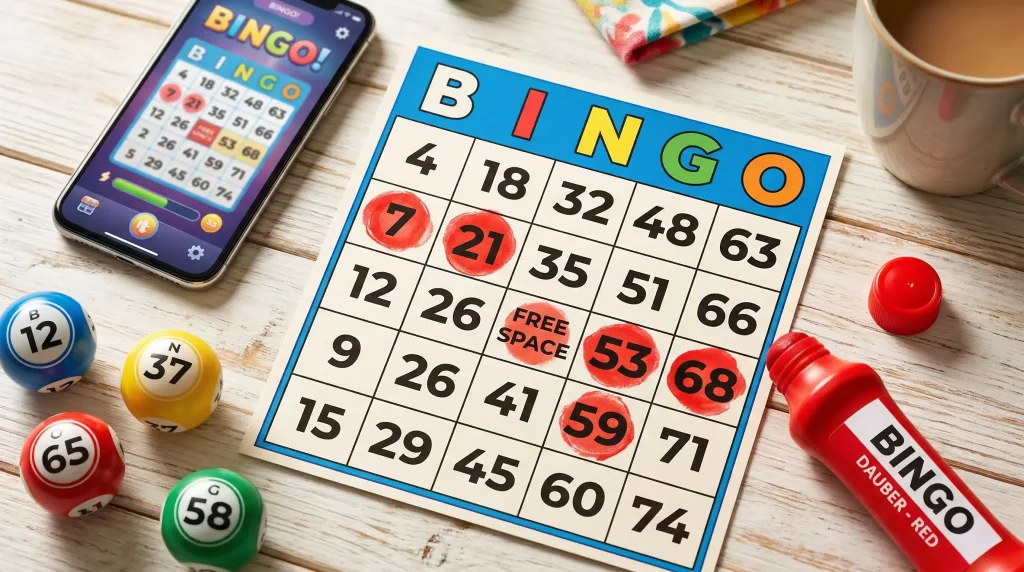
Bingo is one of the oldest gambling formats in America — church halls, community centers, dedicated bingo parlors. Its transition to sweepstakes casinos is more recent and less complete than the slot migration, but the format is gaining traction on platforms looking to diversify beyond the standard slot-and-table formula.
At a sweepstakes casino, bingo works the way you’d expect: numbers are called, you match them on your card, and the first player to complete a winning pattern takes the pot. The key differences from traditional bingo are digital automation (no physical dabber required), the dual-currency system (play with GC or SC), and the community dynamic of playing against other real players in real time. Community game, individual payout — that’s the appeal for players who want social interaction that slots don’t provide.
Bingo Format Variations: 75-Ball and 90-Ball Rules
Two bingo formats dominate the sweepstakes casino space, both adapted from their physical counterparts.
75-ball bingo is the standard American format. Cards feature a 5×5 grid with numbers from 1 to 75, plus a free center space. Numbers are called randomly, and players mark (daub) matching numbers on their cards. Wins are awarded for completing specific patterns — a straight line (horizontal, vertical, or diagonal), an “X” shape, a “T” shape, four corners, or a full card (“blackout”). Different rooms or games specify different winning patterns, and some rotate patterns between rounds.
90-ball bingo follows the British/European format. Cards have a 9×3 grid with 15 numbers from 1 to 90. Each row contains five numbers and four blank spaces. The game is played in three stages: one line (completing any horizontal row), two lines (completing any two rows), and full house (all 15 numbers). Prizes are awarded at each stage, so a single game produces multiple winners. This format offers more frequent but smaller payouts per prize level compared to 75-ball.
The digital format eliminates the main practical challenge of physical bingo: keeping up. With 72.3% of sweepstakes casino activity happening on mobile devices, bingo needs to work on small screens, and auto-daub features make that seamless. Numbers are called and marked automatically on all your cards — you don’t need to manually scan and daub, which means you can play multiple cards simultaneously without the physical dexterity that traditional bingo demands.
Speed bingo variants also appear on some platforms. These compressed formats use fewer numbers (30-ball or 50-ball), smaller grids, and faster calling speeds. A 30-ball bingo game can complete in under two minutes, compared to 10–15 minutes for a standard 75-ball round. Speed bingo appeals to players who want the social bingo experience without the time commitment, though the faster pace means pots are typically smaller.
Jackpot Rounds, Patterns, and Auto-Daub Features
Bingo jackpots at sweepstakes casinos function differently from slot jackpots. Rather than a progressive pool fed by a percentage of every bet, bingo jackpots are typically awarded for achieving a specific win condition within a set number of calls. For example: complete a full blackout pattern within the first 30 numbers called, and you win the jackpot. Miss that threshold, and the jackpot rolls over to the next game.
The jackpot amounts vary widely by platform and room. Some sweepstakes casinos offer fixed jackpots (a set SC amount for each qualifying win), while others run progressive bingo jackpots that grow until someone hits the condition. Progressive bingo jackpots tend to be smaller than their slot counterparts because bingo rooms have fewer participants feeding the pool, but the hit frequency can be higher depending on the qualifying conditions.
Pattern diversity keeps bingo gameplay interesting across sessions. Beyond standard lines and blackouts, many platforms rotate through specialty patterns — letters (forming an “L,” “T,” or “H” on the card), shapes (diamonds, frames, postage stamps), or holiday-themed patterns during promotional events. Some rooms announce the pattern before the game starts; others reveal it gradually, adding a surprise element to each round.
Auto-daub and pre-buy. Auto-daub automatically marks called numbers on your cards, eliminating the possibility of missing a number. Pre-buy allows you to purchase cards for upcoming games in advance — useful if you know a particular room or time slot has better jackpot conditions. Both features are standard on sweepstakes bingo platforms. With roughly 58% of sweepstakes users in the 25–44 age range, bingo rooms skew toward a slightly older demographic than crash games or high-volatility slots, which influences the pace, chat culture, and promotional events operators design for bingo sections.
Chat features. Bingo rooms typically include a real-time chat where players can interact during games. Some platforms employ chat moderators who run mini-games and award bonus prizes within the chat. This social layer is a significant part of bingo’s appeal — it creates a community experience that slots and table games can’t replicate — and it’s one of the main reasons players who enjoy bingo tend to be highly loyal to their preferred platform and room schedule.
Which Sweepstakes Casinos Offer Bingo
Bingo availability at sweepstakes casinos is less universal than slots or table games. The format requires real-time multiplayer infrastructure — a room where multiple players participate simultaneously — which is more complex to operate than single-player RNG games. Not every platform invests in this infrastructure.
Platforms that do offer bingo typically feature it as a dedicated section with scheduled rooms. Unlike slots (available 24/7), bingo games often run on a timetable — specific rooms opening at specific times, with different card prices, jackpot conditions, and player caps. The schedule is usually posted on the bingo section’s landing page or in a downloadable calendar.
Larger sweepstakes casinos are more likely to include bingo. The format requires a critical mass of concurrent players to be viable (a bingo room with three participants isn’t much fun), and only platforms with substantial user bases can guarantee enough players to fill rooms consistently. Smaller platforms may offer bingo sporadically or not at all.
If bingo is a priority for your sweepstakes experience, check the platform’s game library before signing up. Look for a dedicated bingo section, verify that rooms are actively running (not just listed but empty), and pay attention to the schedule to ensure games are available during your preferred play times. Bingo is a niche within the sweepstakes ecosystem, but for the players it appeals to, it offers something no other game category replicates: real-time competition with real people, structured around a game that’s been bringing communities together for nearly a century.