
Sweepstakes Casino Age Requirements: State Legal Limits
 Available in US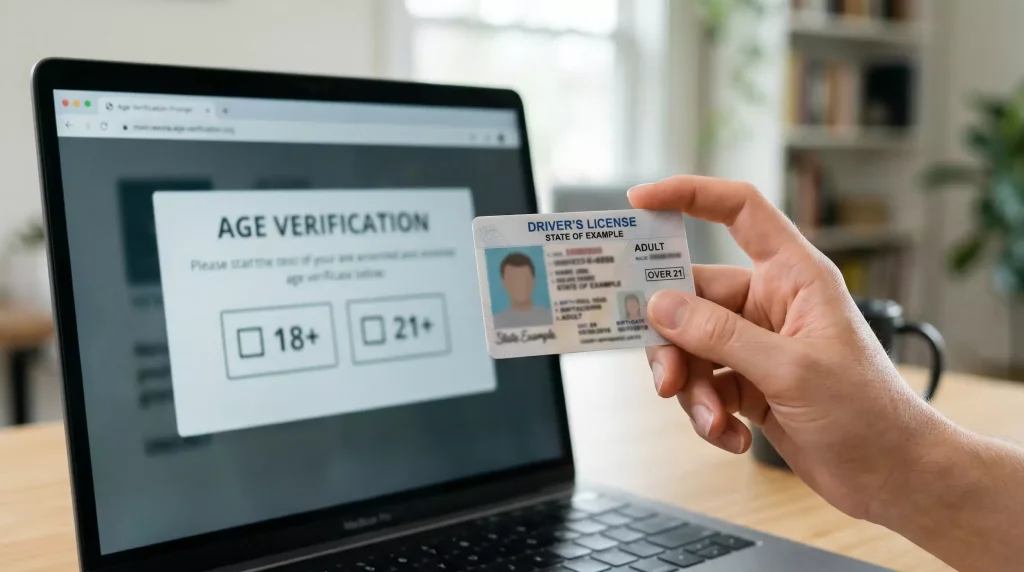
How old do you need to be to play at a sweepstakes casino? The answer depends on which platform you’re using, which state you’re in, and whether the platform’s terms of service or your state’s law sets the higher bar. In most cases, the minimum is 18. In some states and on some platforms, it’s 21. The inconsistency itself is a feature of the sweepstakes model’s regulatory ambiguity — without a unified federal framework, age requirements are a patchwork of operator policies and state-level rules.
The stakes of getting this right aren’t trivial. Underage access to sweepstakes casinos is one of the issues regulators cite most frequently when arguing for tighter oversight. Age gates and fine print — the mechanisms platforms use to enforce age minimums — vary significantly in rigor, and the gap between policy and enforcement is wider than most players realize.
Minimum Age Requirements: 18+ and 21+ Operator Restrictions
The majority of sweepstakes casinos set their minimum age at 18, following the same threshold used by most traditional sweepstakes promotions in the US. This is specified in the platform’s terms of service, which every user must accept at registration. A smaller number of platforms set the minimum at 21, typically those that are trying to align their policies more closely with regulated gambling standards or that operate in states where the legal gambling age is 21.
The difference between 18+ and 21+ policies creates a confusing landscape for young adults. A 19-year-old can register on most sweepstakes platforms, play for Sweeps Coins, and potentially redeem real money — but can’t legally enter a casino in most states or create an account on a licensed iGaming platform (which typically requires 21+). This gap exists because sweepstakes casinos don’t classify themselves as gambling operations, so they’re not bound by gambling-age statutes in most jurisdictions.
The age question intersects with problem gambling data in a way that deserves attention. Research from the National Council on Problem Gambling found that 15% of men aged 18–34 reported experiencing at least one indicator of problem gambling behavior, compared to just 2% among those 55 and older. The youngest eligible demographic — those between 18 and 21 who can access sweepstakes casinos but not regulated casinos — falls squarely within the highest-risk age bracket. This is one of the arguments regulators use for pushing sweepstakes platforms toward a 21+ minimum.
In practice, operator-level age policies break down roughly as follows. Most of the large, established platforms (including the ones with the highest market share) set 18 as the default minimum, with carve-outs for states that require 21. A smaller group of operators — particularly those positioning themselves as “responsible” alternatives or those seeking to preempt regulatory criticism — voluntarily adopt 21+ across all states. Neither approach is legally mandated at the federal level; it’s an operator choice, influenced by regulatory pressure, brand positioning, and the desire to avoid becoming the test case for an underage access lawsuit.
For players, the practical implication is straightforward: check the terms of service before registering. If you’re between 18 and 20, you’re eligible on most platforms but not all, and your eligibility may change if your state passes new legislation. If you’re 21+, you meet the threshold everywhere. The age displayed on your government-issued ID at the time of KYC verification is what the platform will enforce — not your self-reported age during signup.
State-Specific Age Rules and Where They Override T&C
State law can override a platform’s own age policy, setting a higher minimum than what the operator’s terms specify. When there’s a conflict between the platform’s 18+ policy and a state’s 21+ requirement, the state law takes precedence — and platforms are responsible for enforcing it through geolocation and age verification.
Several states have gambling age requirements that apply to sweepstakes casinos either explicitly or through regulatory interpretation. States where the legal gambling age is 21 — including Arizona, Iowa, and Oregon among others — may extend that requirement to sweepstakes platforms, particularly as regulators increasingly treat them as gambling services. The enforcement mechanism varies: in some states, the gaming commission has issued guidance applying the 21+ standard to sweepstakes operators. In others, the question hasn’t been formally addressed, creating a grey zone where the operator’s 18+ policy technically applies but could be challenged.
The rapid growth of the sweepstakes market has outpaced state-level age policy in many jurisdictions. With approximately 58% of sweepstakes users falling in the 25–44 age bracket and the user base skewing younger than traditional casino demographics, the question of appropriate minimum age is becoming more politically salient. States considering sweepstakes bans in 2026 are also discussing age-specific provisions — some proposals would set 21 as the minimum for any sweepstakes platform that offers real-money redemption, regardless of whether the state bans the model outright.
For players near the age threshold, the safest approach is to verify your state’s specific position. Check whether your state gaming commission has issued any guidance on sweepstakes casino age requirements. If no guidance exists, the platform’s terms of service apply — but keep in mind that this could change at any time as states continue to develop their regulatory frameworks for sweepstakes gaming.
How Age and Identity Verification Works at Signup
Age verification at sweepstakes casinos happens in two stages: a soft check at signup and a hard check at redemption. Understanding both stages — and their limitations — explains why underage access remains a concern despite platforms having age policies in place.
Signup verification (soft check). During registration, most platforms ask for your date of birth and require you to confirm that you meet the minimum age requirement by checking a box. Some platforms also collect your state of residence to apply state-specific age rules. This is a self-declaration system — the platform accepts the information you provide without independent verification. No ID is scanned, no document is reviewed, and no third-party age verification service is queried. The barrier to entry is essentially an honor system.
This soft-check approach is one of the primary criticisms leveled at sweepstakes casinos by regulators and responsible gambling advocates. Licensed iGaming platforms in states like New Jersey and Michigan are required to verify age and identity before allowing any gameplay — not just before allowing withdrawals. The sweepstakes model’s delayed verification creates a window during which underage users can access games, accumulate play time, and develop engagement habits before any identification check occurs.
Redemption verification (hard check). When a player submits their first Sweeps Coin redemption request, the platform triggers a full KYC (Know Your Customer) process that includes government-issued photo ID verification. At this point, age is verified against an actual document. If the player is under the minimum age, the redemption is denied, and the account is typically suspended or closed. Any SC balance is forfeited.
The gap between these two stages is where the enforcement problem lives. A player who signs up at 17 with a false birth date can play for months — accumulating play habits, making Gold Coin purchases, and engaging with the platform’s retention features — before encountering any real verification. By the time the age check catches them (at redemption), the behavioral engagement has already occurred. This delayed enforcement model is adequate for preventing underage financial payouts but inadequate for preventing underage access to gambling-like experiences.
Some platforms are moving toward earlier verification. A handful of operators have implemented ID checks during registration or within the first 24 hours of account creation, regardless of whether a redemption has been requested. This approach is more expensive (KYC verification costs money per check) and creates friction that reduces signup conversion rates — but it addresses the regulatory criticism directly. As the legislative environment tightens, expect more platforms to adopt earlier verification as a preemptive compliance measure.